Article Plan: Scotts Fall Weed and Feed Instructions PDF
This comprehensive guide details application, ingredients, safety, and troubleshooting for Scotts Fall Weed and Feed,
including regional variations and comparisons to alternative products like Ortho Weed B Gon.
Scotts Fall Weed and Feed is a popular choice for homeowners seeking a convenient two-in-one solution for lawn care during the autumn season. This product combines a fertilizer designed to strengthen grass roots before winter dormancy with a herbicide formulated to eliminate common lawn weeds. It’s a widely available and relatively straightforward method for achieving a healthier, more attractive lawn.
Understanding how and when to properly apply Scotts Fall Weed and Feed is crucial for maximizing its effectiveness and avoiding potential damage to your grass. This guide will provide a detailed overview of the product, covering everything from its key ingredients and targeted weeds to step-by-step application instructions and post-application care. We will also explore specific formulations like Scotts WinterGuard and regional variations such as Scotts WeedEx Southern, offering a complete resource for achieving optimal fall lawn health.
Understanding Weed and Feed Products
Weed and feed products represent a combined approach to lawn maintenance, simplifying the process by delivering both weed control and lawn fertilization in a single application. These granular formulations typically contain herbicides to target existing broadleaf weeds and a fertilizer blend to nourish the grass, promoting growth and density.
The benefit lies in convenience, reducing the need for separate applications. However, it’s vital to understand that weed and feed isn’t always the ideal solution for every lawn. Factors like weed infestation levels, grass type, and soil conditions should be considered. Proper timing is also critical; fall applications focus on strengthening roots for winter, while spring/summer formulas prioritize growth. Choosing the right product, like Scotts Fall Weed and Feed, and applying it correctly are key to success.
Scotts Fall Weed and Feed: What It Does
Scotts Fall Weed and Feed is engineered to prepare your lawn for the colder months, offering a dual-action benefit. It actively kills over 50 listed broadleaf weeds, including common culprits like clover, dandelion, plantain, morningglory, and chickweed, preventing their spread. Simultaneously, it feeds your lawn with essential nutrients, strengthening the grass roots to withstand winter stress and promoting a thicker, healthier turf.
This formulation differs from spring/summer weed and feeds, focusing on root development rather than rapid top growth. By fortifying the root system, it increases the lawn’s resilience against winter damage and sets the stage for vigorous growth in the spring. It’s a preventative and corrective measure, addressing existing weeds while building long-term lawn health.
Key Ingredients in Scotts Fall Weed and Feed
Scotts Fall Weed and Feed’s effectiveness stems from a carefully balanced blend of ingredients. It contains a selective herbicide, typically 2,4-D, dicamba, and MCPP, designed to target broadleaf weeds without harming your grass when applied correctly. These herbicides disrupt the weed’s growth processes, leading to their eventual elimination.
Alongside the weed control agents, the product incorporates a fertilizer blend rich in nitrogen, phosphorus, and potassium – the essential macronutrients for plant growth. The nitrogen promotes lush, green foliage, while phosphorus supports root development, crucial for winter hardiness. Potassium enhances overall plant health and stress tolerance. The specific N-P-K ratio varies depending on the formulation, like WinterGuard, but always aims to strengthen the lawn.

Identifying Common Lawn Weeds Targeted
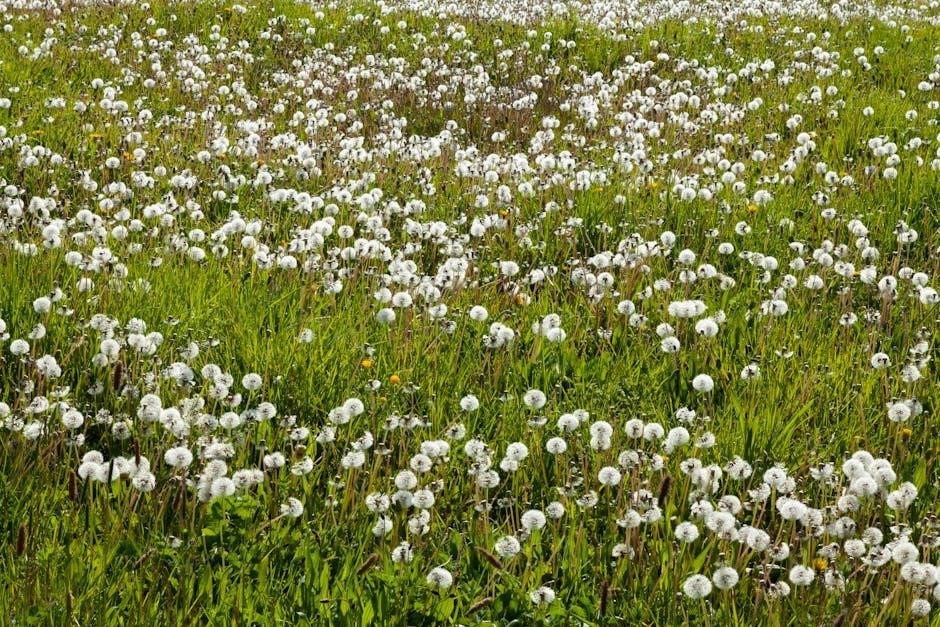
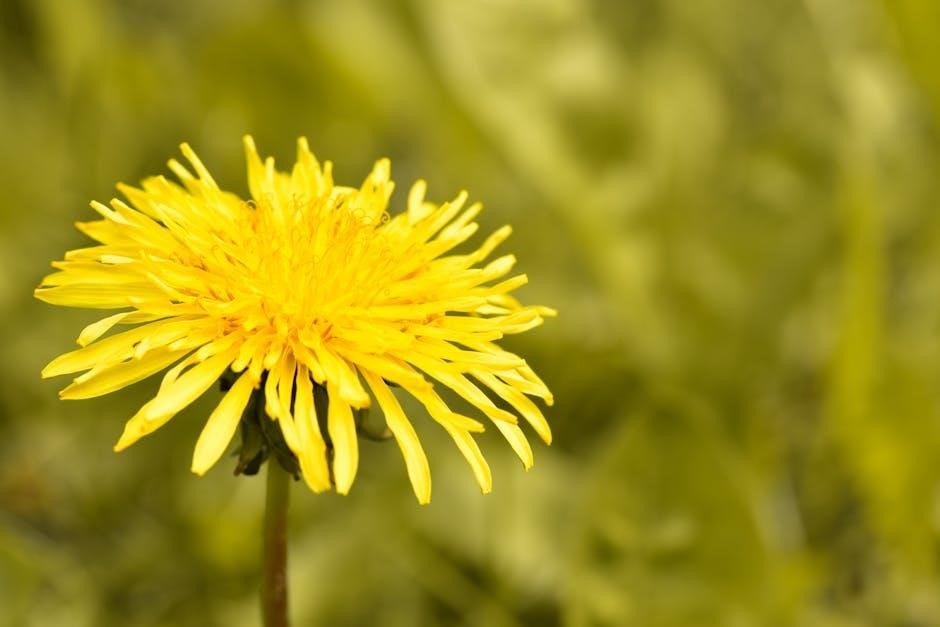
Scotts Fall Weed and Feed is formulated to combat a wide array of troublesome broadleaf weeds. Common targets include dandelion, easily recognized by its yellow flowers and deep taproot, and clover, which spreads rapidly via creeping stems. Plantain, with its distinctive ribbed leaves, and chickweed, a low-growing, sprawling weed, are also effectively controlled.
The product also addresses more persistent weeds like morningglory, chicory, eveningprimrose, and purslane. Southern formulations, such as Scotts WeedEx Southern, specifically target dollarweed, a common nuisance in warmer climates. Accurate weed identification is crucial; Scotts products control listed weeds, so knowing what you’re dealing with ensures optimal results. Recognizing these weeds early allows for timely application and prevents extensive infestations.
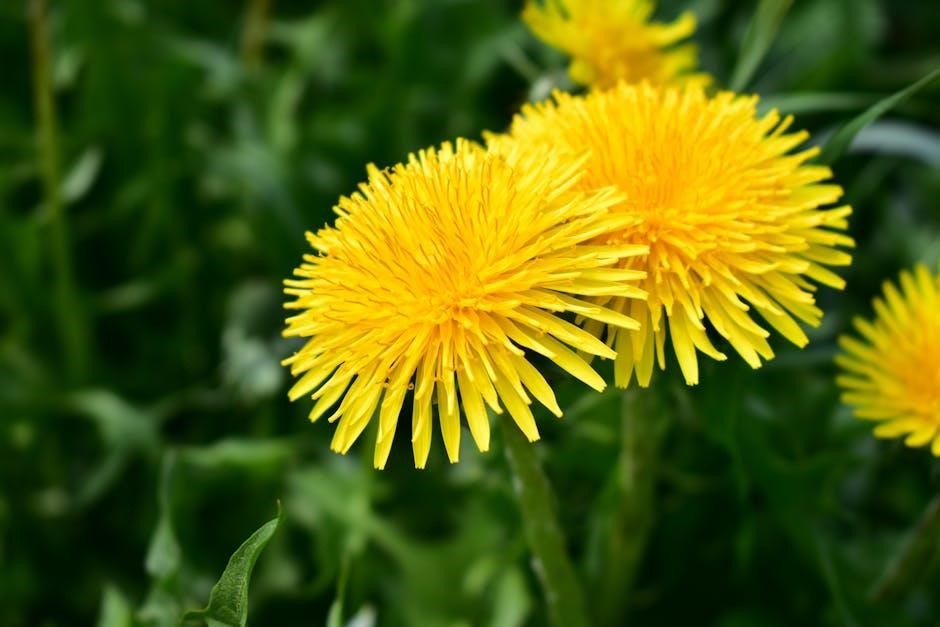
Dandelion Control
Dandelions are a prevalent lawn weed, identifiable by their bright yellow flowers and deeply rooted taproot, making them difficult to remove manually. Scotts Fall Weed and Feed effectively targets dandelions by delivering a systemic herbicide directly to the root system through the leaves. This ensures not just top-growth kill, but also disrupts the plant’s ability to regenerate.
For optimal dandelion control, application should occur when dandelions are actively growing, typically in the fall. The herbicide within the Weed and Feed formula is absorbed by the dandelion leaves and translocated downwards, ultimately eradicating the entire plant. Consistent application, following label instructions, is key to preventing dandelion re-establishment and maintaining a healthy, weed-free lawn.
Clover Elimination
Clover, often recognized by its three-leaf structure, is a common lawn weed that thrives in compacted or nitrogen-deficient soil. Scotts Fall Weed and Feed offers a solution by combining weed control with essential lawn fertilization. The herbicide component specifically targets clover, disrupting its growth processes and leading to its elimination.
Effective clover control relies on proper timing and application. Fall application is ideal, as clover is actively absorbing nutrients in preparation for winter. The Weed and Feed formula not only kills existing clover but also strengthens the surrounding grass, helping it to outcompete future clover growth. Consistent use, adhering to the product label’s guidelines, is crucial for long-term clover management and a lush, healthy lawn.
Plantain and Chickweed Management
Plantain and chickweed are broadleaf weeds frequently encountered in lawns, often indicating compacted soil or excessive moisture. Scotts Fall Weed and Feed effectively manages these weeds through its dual-action formula. The herbicide component disrupts the plant’s cellular processes, leading to its decline, while the fertilizer component promotes robust grass growth.
Successful management requires understanding each weed’s lifecycle. Fall application is particularly effective as these weeds are actively preparing for winter. Proper spreader calibration and even application are vital to ensure complete coverage and optimal results. Consistent monitoring and repeat applications, as directed on the product label, may be necessary for persistent infestations, fostering a healthier, weed-free lawn.
When to Apply Scotts Fall Weed and Feed
The optimal timing for Scotts Fall Weed and Feed application is during the late fall season, typically from September through November, before the first hard frost. This period allows the product to effectively control existing weeds while simultaneously strengthening grass roots in preparation for winter dormancy. Unlike spring or summer weed and feed products, fall formulations prioritize root development and winter hardiness.
Consider your regional climate; warmer climates may allow for later applications. Ensure grass is actively growing, but slowing down as temperatures cool. Avoid application during drought conditions or if heavy rain is forecast within 24-48 hours. Following these guidelines maximizes the product’s effectiveness and promotes a healthier lawn come spring.
Preparing Your Lawn for Application
Proper lawn preparation is crucial for maximizing the effectiveness of Scotts Fall Weed and Feed. Begin by mowing your lawn to a standard height – typically around 2-3 inches. This ensures the product reaches the weeds effectively and isn’t blocked by overly long grass. Rake the lawn to remove any accumulated thatch, leaves, or debris. This allows for better contact between the granules and the soil.
Watering the lawn lightly before application is also recommended, as the granules adhere better to slightly damp grass. Avoid applying to dry, dusty lawns. Finally, inspect the lawn for any areas of stress or damage and address them before applying the weed and feed. A well-prepared lawn ensures even coverage and optimal results.
Step-by-Step Application Instructions
Applying Scotts Fall Weed and Feed correctly is vital for a healthy, weed-free lawn. First, determine the area of your lawn to calculate the amount of product needed. Then, using a Scotts spreader, apply the granules evenly across the lawn, overlapping slightly with each pass to avoid striping. Walk at a consistent pace for uniform distribution.
Avoid applying near waterways or areas where children and pets play. After application, sweep any stray granules off hard surfaces like sidewalks and driveways. Following these steps ensures thorough coverage and minimizes potential runoff. Remember to consult the product packaging for specific application rates based on your spreader type.
Calibrating Your Spreader
Proper spreader calibration is crucial for even application of Scotts Fall Weed and Feed. Begin by referencing the bag’s instructions for recommended settings based on your spreader type – either a drop or rotary spreader. Perform a calibration test by applying a measured amount of product over a known area. Adjust the spreader setting until the application rate matches the recommended amount per square foot.
For example, if the bag recommends 4 lbs per 1,000 sq ft, ensure your test application achieves this rate. Repeat the test if necessary. Accurate calibration prevents over or under-application, maximizing effectiveness and minimizing potential lawn stress. Consistent calibration ensures uniform weed control and fertilization across your entire lawn.
Application Technique for Even Coverage
Achieving even coverage with Scotts Fall Weed and Feed requires a methodical approach. Walk at a consistent pace, overlapping each pass by a few inches to avoid striping. Maintain a steady hand and ensure the spreader is functioning correctly throughout the application. Avoid applying on windy days, as this can cause uneven distribution and drift onto non-target areas.
For rotary spreaders, use a sweeping motion as you walk. With drop spreaders, maintain a straight path. Pay close attention to edges and corners, ensuring these areas receive adequate coverage. Consider applying half the recommended amount in one direction, then the other half perpendicularly, for optimal uniformity.
Scotts WinterGuard Weed and Feed: A Specific Formulation
Scotts WinterGuard Weed and Feed distinguishes itself through its late-fall application timing. Unlike standard Weed and Feed products designed for spring or summer, WinterGuard focuses on strengthening grass roots before winter dormancy. This specialized formulation combines a fertilizer rich in essential nutrients with a selective herbicide targeting common fall and winter weeds.
It’s engineered to maximize root development, enhancing the lawn’s resilience against winter stress and promoting vigorous growth in the spring. WinterGuard effectively controls weeds like henbit, rabbit-tobacco, and chickweed, preventing their spread during milder winter periods. Applying this product prepares the lawn for a healthier, more robust spring recovery.
Scotts WeedEx Southern: Regional Variation
Scotts WeedEx Southern is specifically formulated to address the unique weed challenges faced by lawns in the Southern United States. Recognizing that Southern lawns contend with different weed species than those in other regions, this product delivers targeted control against prevalent Southern weeds like dollarweed and clover.
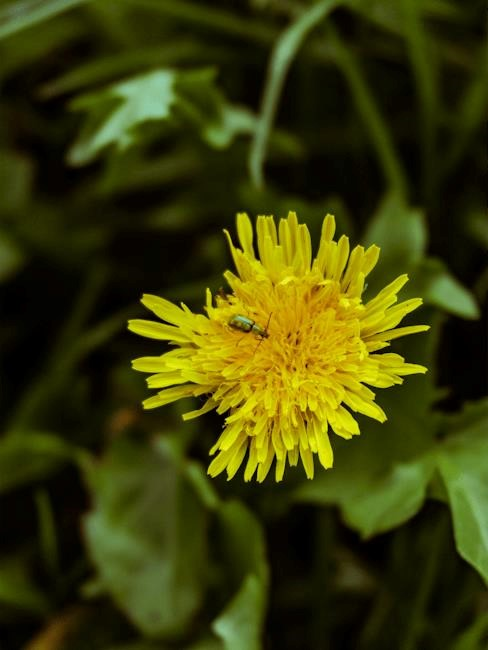
WeedEx Southern effectively controls over 25 listed weeds, including dandelion, chickweed, and oxalis, offering a comprehensive solution for Southern lawn care. Optimal application occurs when both grass and weeds are actively growing, ideally in the fall to combat winter weeds such as henbit and rabbit-tobacco. This regional variation ensures maximum efficacy and a healthier, weed-free Southern lawn.
Scotts Turf Builder Southern Lawn Food – Complementary Products
To achieve a truly thriving Southern lawn, consider integrating Scotts Turf Builder Southern Lawn Food alongside Scotts Fall Weed and Feed. While the Weed and Feed product tackles existing weeds and provides initial feeding, Scotts Turf Builder Southern Lawn Food offers sustained nourishment throughout the spring and summer months.
This complementary approach ensures consistent nutrient delivery, promoting robust grass growth and resilience. Scotts also recommends utilizing Scotts Turf Builder Bonus S Southern Weed & Feed2 in the fall for continued weed control and fertilization. This layered strategy, combining targeted weed elimination with ongoing lawn nourishment, maximizes the health and beauty of your Southern turf, creating a lush and vibrant landscape.
Safety Precautions During Application
Prioritizing safety is crucial when applying Scotts Fall Weed and Feed. Always wear protective eyewear, gloves, and a long-sleeved shirt to minimize skin contact. Prevent inhalation by using a dust mask, especially during spreader loading and application. Keep children and pets away from the treated area for the duration specified on the product label – typically 24 hours, but always confirm.
Avoid applying in windy conditions to prevent drift onto non-target plants or areas. Thoroughly wash hands and any exposed skin after handling the product. Store Scotts Fall Weed and Feed in a secure, locked location, out of reach of children and animals, and follow disposal guidelines carefully to protect the environment.
Post-Application Care
Following application, observe your lawn closely for any signs of stress or discoloration. Avoid mowing the treated area for at least two days to allow the product to fully bind with the grass and weeds. Resist the urge to immediately rake or disturb the lawn, as this can disrupt the treatment process.
Monitor for weed control effectiveness; some weeds may require a second application depending on severity and species. Continue regular lawn maintenance practices, such as edging and trimming, but avoid introducing new stressors like heavy foot traffic. Proper post-application care maximizes the benefits of Scotts Fall Weed and Feed, ensuring a healthy and weed-free lawn.
Watering After Application
While Scotts Fall Weed and Feed doesn’t require immediate watering, light irrigation within 24-48 hours after application is generally recommended. This helps dissolve the fertilizer granules and encourages uptake by the grass roots, boosting effectiveness. Avoid heavy watering, which can cause runoff and potentially spread the weed control agent to unintended areas.
The goal is to gently moisten the lawn, not saturate it. Subsequent watering should follow your regular lawn care schedule, typically about one inch of water per week, depending on rainfall and climate. Proper hydration supports healthy grass growth and aids in the recovery from any potential stress caused by the treatment.
Potential Lawn Stress and Recovery
Scotts Fall Weed and Feed, while effective, can sometimes cause temporary stress to your lawn. This might manifest as slight discoloration or a slowed growth rate, particularly if applied during unfavorable conditions like extreme heat or drought. The weed control component can also temporarily impact sensitive grass types.
To minimize stress, adhere strictly to application guidelines and avoid over-application. If stress occurs, ensure adequate watering and avoid further lawn treatments until recovery. Providing your lawn with essential nutrients through a balanced fertilizer can accelerate the healing process. Healthy, well-maintained lawns are more resilient and recover faster from any potential stress.
Troubleshooting Common Issues
Even with careful application, occasional issues can arise with Scotts Fall Weed and Feed. Uneven results often stem from improper spreader calibration or inconsistent application technique – ensure even coverage for optimal weed control and feeding. Grass discoloration can occur due to over-application or application during stress conditions; proper watering helps mitigate this.
If weeds persist after treatment, consider a follow-up application (following label instructions) or spot-treat with a targeted herbicide like Ortho Weed B Gon. Remember, Scotts products are designed to work best when used as part of a comprehensive lawn care program. Always consult the product label for specific troubleshooting advice and safety precautions.
Uneven Results
Experiencing patchy weed control or inconsistent lawn greening after applying Scotts Fall Weed and Feed is a common concern. The primary culprit is often inconsistent spreader calibration; ensure your spreader is correctly set to the recommended rate for your specific Scotts product. Uneven walking speed during application also contributes, leading to areas receiving too much or too little product.
Furthermore, pre-existing conditions like compacted soil or uneven lawn growth can hinder absorption. Thoroughly prepare your lawn before application, and consider aerating compacted areas. If issues persist, a second, carefully calibrated application may be necessary, always adhering to label guidelines. Remember, consistent coverage is key for uniform results.
Grass Discoloration
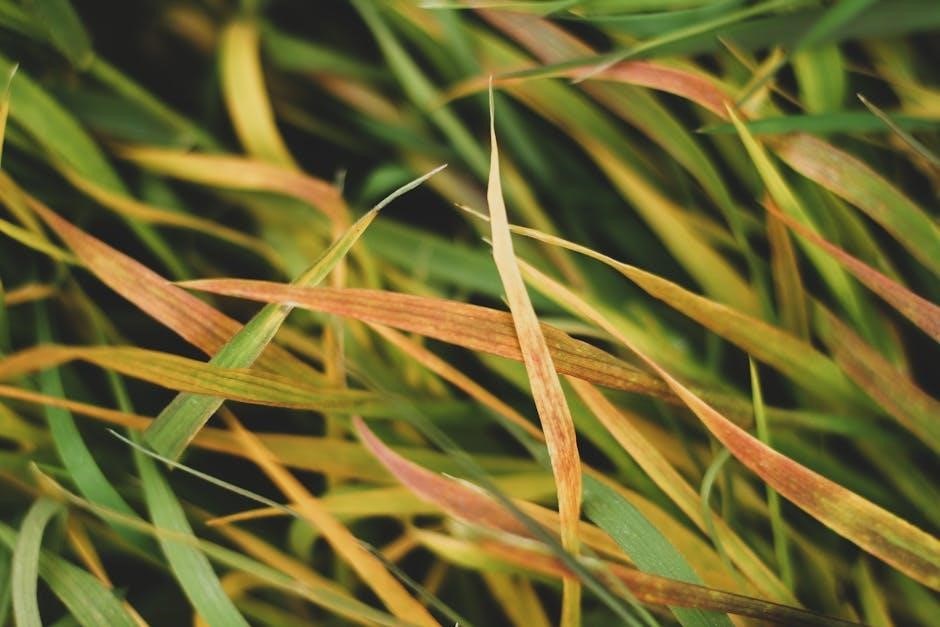
Temporary grass discoloration, often appearing as yellowing or bronzing, can occur after Scotts Fall Weed and Feed application. This is usually a result of the herbicide component stressing the grass, particularly during periods of high temperature or drought. The discoloration is generally cosmetic and indicates the product is actively working on weeds.
However, excessive discoloration could signal over-application. Always strictly adhere to the recommended application rates on the product label. Proper watering post-application helps mitigate stress and encourages recovery. If discoloration is severe or prolonged, consider reducing the application rate in future treatments or consulting a lawn care professional to assess potential underlying issues.
Comparing Scotts Fall Weed and Feed to Other Products (Ortho Weed B Gon)
While Scotts Fall Weed and Feed offers a combined fertilizer and herbicide solution, products like Ortho Weed B Gon provide targeted weed control. Weed and Feed simplifies lawn care, addressing both needs simultaneously, but offers less control over fertilizer application. Ortho Weed B Gon, a separate herbicide, allows for precise weed treatment without adding fertilizer if the lawn doesn’t require it.
Some users prefer Ortho’s focused approach, especially for spot treatments or lawns with specific nutrient needs. Scotts products, including Weed B Gon, are often readily available at hardware stores, balancing convenience with cost. Ultimately, the best choice depends on individual lawn conditions and preferences.
Finding the Scotts Fall Weed and Feed PDF Instructions
Locating the official Scotts Fall Weed and Feed PDF instructions is crucial for safe and effective application. The most reliable source is the Scotts website (Scotts.com), where you can search by product name or SKU. Many retailers, like Home Depot and Lowe’s, also host downloadable PDFs on their websites, specifically for the products they sell.
A quick internet search using terms like “Scotts Fall Weed and Feed instructions PDF” will yield numerous results, but always verify the source to ensure it’s an official document. These PDFs contain detailed application rates, safety precautions, and troubleshooting tips, ensuring optimal lawn care and minimizing potential issues.
Storage and Disposal Guidelines
Proper storage and disposal of Scotts Fall Weed and Feed are essential for safety and environmental responsibility. Store the product in a cool, dry place, out of reach of children and pets, and away from food or drink. Ensure the container is tightly sealed to prevent leaks or spills. Avoid storing it in direct sunlight or extreme temperatures.
When disposing of empty containers, consult local regulations for proper procedures. Do not reuse the container for other purposes. If any product remains, do not pour it down the drain or into waterways. Contact your local waste management authority for guidance on hazardous waste disposal options, ensuring compliance with environmental standards.
Frequently Asked Questions (FAQ)
Q: When is the best time to apply Scotts Fall Weed and Feed? A: Apply during the fall when weeds are actively growing and before the first frost. Q: Can I use this product on all grass types? A: It’s formulated for cool-season grasses; check the label for specific compatibility. Q: What if I have recently seeded my lawn? A: Avoid application until the grass is well-established.

Q: How long before I can walk on the lawn after application? A: Wait until the product has been thoroughly watered in and the grass is dry. Q: Is Scotts WinterGuard the same as Fall Weed and Feed? A: WinterGuard is a specific fall formulation focusing on root development. Q: What if I miss spots during application? A: Reapply to those areas, following label instructions carefully.