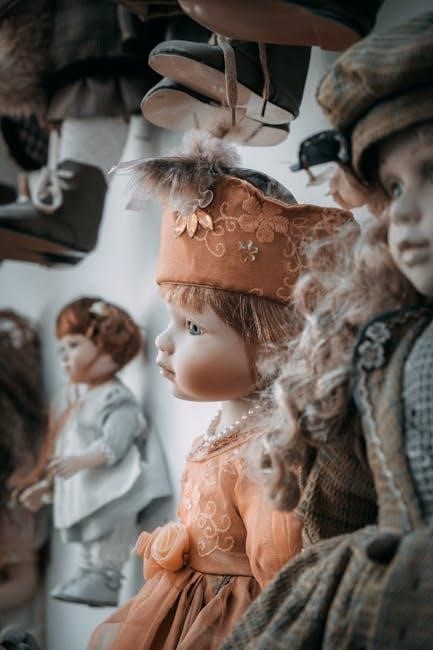
Doll Mark Reference Guide: An Overview
Delving into doll collecting necessitates understanding identifying marks; these subtle clues unlock a doll’s history, origin, and potential value for enthusiasts.
What are Doll Marks?
Doll marks are identifying signatures, symbols, or codes applied by manufacturers directly onto a doll’s body, typically on the head, neck, back, or feet.
These markings serve as a manufacturer’s “signature,” providing crucial information about the doll’s creation. They can range from simple impressed or molded symbols to elaborate painted names and numbers.
Historically, marks evolved alongside manufacturing techniques. Early marks were often hand-incised or painted, while later marks utilized more sophisticated methods like stamps or molded impressions.
The presence – or absence – of a mark is a significant clue. While most manufacturers marked their dolls, some did not, or markings may have faded over time due to handling and age. Understanding the different types of marks is fundamental to successful doll identification and valuation.
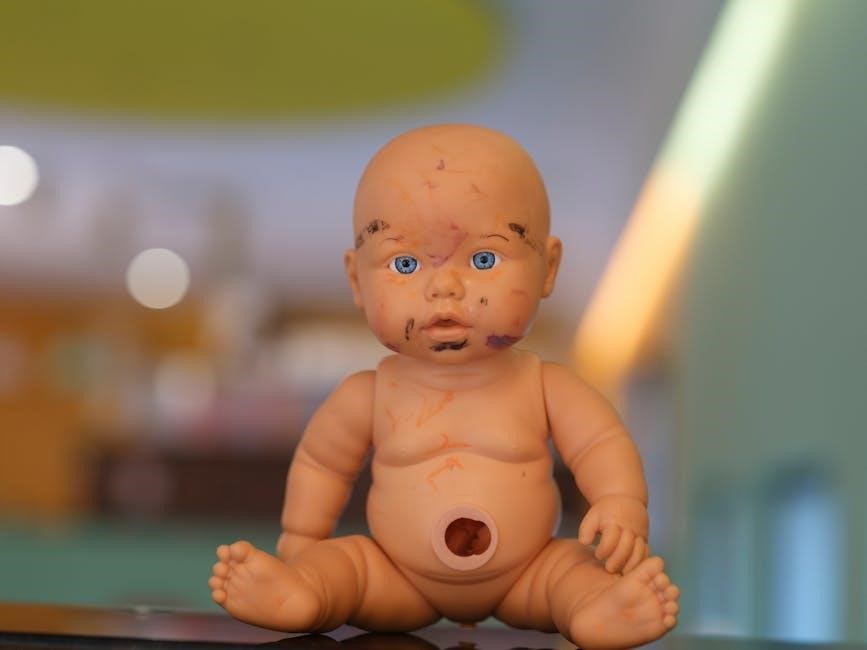
Essentially, doll marks are the key to unlocking a doll’s story!
Why are Doll Marks Important?
Doll marks are paramount for several reasons, primarily aiding in accurate identification and establishing a doll’s provenance – its history of ownership.
A clear mark can pinpoint the manufacturer, narrowing down the possible date of production and the doll’s intended market. This is crucial for collectors seeking specific brands or eras.
Furthermore, marks significantly impact a doll’s value. Dolls from renowned manufacturers, or those with rare or unique markings, often command higher prices in the collector’s market.
Marks also help distinguish authentic dolls from reproductions or fakes. Careful examination of a mark’s style, placement, and clarity can reveal inconsistencies indicative of a counterfeit.
Beyond monetary value, understanding a doll’s mark connects collectors to the artistry and history behind these cherished objects, enriching the collecting experience. They are vital pieces of the puzzle!
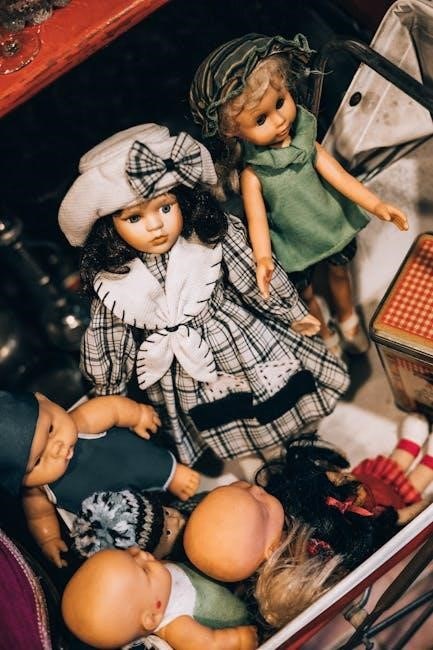
Types of Doll Marks & Manufacturers
Doll markings varied greatly depending on the era, country, and manufacturer; exploring these distinctions reveals fascinating insights into doll-making history and techniques.
Early Doll Marks (Pre-1900)
Before the 20th century, doll markings were often inconsistent and rudimentary, presenting a significant challenge for collectors today. Many early dolls, particularly those crafted by individual artisans or small workshops, bear no marks at all. However, as industrial production began to emerge, manufacturers started applying identifying symbols.
These early marks frequently consisted of impressed or painted symbols, initials, or the full names of the doll makers. The quality of these marks could vary considerably, with some being deeply and clearly impressed, while others were faint and easily worn away over time. Common materials like bisque, wax, and early composition dolls often featured marks on the head, shoulders, or back.
Identifying these marks requires careful examination and a keen eye, as variations within a single manufacturer’s output were common. The absence of a mark doesn’t necessarily indicate a doll is less valuable; it simply adds to the complexity of its identification and historical research.
German Marks – Bisque & Composition Dolls
Germany dominated doll production in the late 19th and early 20th centuries, resulting in a vast array of bisque and composition doll marks. Identifying these marks is crucial, as German dolls represent a significant portion of the antique doll market.
Commonly encountered marks include those from Armand Marseille (AM with a number), Kestner (often with a star or numbers), and J.D. Kestner. Many marks feature the word “Germany” or “Deutshland,” sometimes alongside a manufacturer’s symbol. Composition dolls frequently bear simpler marks, often just initials or numbers. The quality of the mark’s impression varied greatly.
Beware of fakes; unscrupulous individuals sometimes add marks to increase a doll’s value. Thorough research and comparison with known authentic marks are essential. Variations in font, size, and placement can indicate authenticity or a potential forgery. Detailed mark guides and collector resources are invaluable for accurate identification.
French Marks – Bébé Dolls & Fashion Dolls
French dollmaking, particularly of bébé dolls and elegant fashion dolls, flourished during the 19th and early 20th centuries. Identifying French doll marks requires attention to detail, as they often exhibit artistic flair and subtle variations.
Key manufacturers include Jumeau (often marked “Jumeau Medaille d’Or”), Bru (typically marked “Bru Jne Paris”), and Steiner. Marks frequently include the manufacturer’s name, Paris as the location, and sometimes a medal or award indication. Fashion dolls often have marks on the back of the head or within the shoulder plate.
Look for hallmarks of quality, such as finely painted features and elaborate costumes. French marks can be challenging to decipher due to stylistic differences and occasional fading. Consulting specialized French doll mark reference books is highly recommended for accurate identification and dating. Remember that some marks were applied with a brush, resulting in a less precise appearance.
Early 20th Century Doll Marks (1900-1940)
The period between 1900 and 1940 witnessed significant changes in doll manufacturing, with both established European companies and emerging American firms gaining prominence. Doll marks from this era reflect these shifts, becoming more standardized yet still retaining unique characteristics.
German doll production continued to be substantial, though marks began to incorporate “Germany” or “Made in Germany” due to import regulations. American manufacturers like Ideal began to establish their own distinct markings, often focusing on brand recognition. British dollmakers, such as Pedigree, also developed recognizable marks.
This era saw an increase in composition dolls alongside bisque, leading to new marking techniques. Identifying marks are typically found on the head, shoulder plate, or back of the doll. Careful examination and comparison with reference guides are crucial for accurate dating and attribution during this dynamic period of doll history.
American Doll Marks – Ideal, Shirley Temple, & More
American doll manufacturing flourished from 1900-1940, largely driven by the Ideal Novelty and Toy Co. Ideal’s marks evolved, starting with simple impressed “Ideal” markings and progressing to more elaborate designs including the Ideal logo and patent numbers. Identifying these variations is key to dating their dolls.
The Shirley Temple doll line, immensely popular during the 1930s, features distinct marks – often a tag sewn into the clothing or an impressed mark on the head. These marks frequently include the “Ideal” name and copyright information. Other American manufacturers, like Effanbee, also developed unique markings.
Marks from this period can be found on the doll’s head, back, or feet. Understanding the nuances of these American doll marks requires careful observation and comparison with established reference materials. The quality and clarity of the mark can also indicate authenticity and age.
British Doll Marks – Pedigree & Others
British doll production, particularly by Pedigree, gained prominence in the early to mid-20th century. Pedigree dolls are renowned for their quality and distinctive markings, often featuring the Pedigree logo alongside model numbers and copyright dates. These marks are typically found stamped on the doll’s back or neck.
Early Pedigree marks were simpler, evolving into more detailed designs as the company grew. Identifying these variations aids in accurately dating Pedigree dolls. Beyond Pedigree, other British manufacturers like Lineol and Palitoy also produced dolls with unique markings.
Marks from these lesser-known companies can be more challenging to decipher. Common features include impressed names, country of origin (“Made in England”), and sometimes, artist signatures. Careful examination of the mark’s style and placement is crucial for identification. Researching specific British doll manufacturers is essential for accurate attribution.
Mid-20th Century Doll Marks (1940-1970)
The period between 1940 and 1970 witnessed a significant shift in doll manufacturing, driven by new materials like vinyl and plastic. Doll markings from this era reflect these changes, becoming more standardized and often molded directly into the doll’s body rather than stamped. This era saw the rise of iconic dolls, each with distinct marking characteristics.
Post-war economic conditions influenced production, leading to increased mass production and simplified marking schemes for some manufacturers. However, quality control marks and copyright information remained prevalent. Identifying these marks requires understanding the evolving manufacturing techniques and materials used during this period.
This timeframe also saw the emergence of numerous smaller manufacturers, resulting in a wider variety of marks and a greater challenge for collectors seeking accurate identification. Thorough research and comparison are key to deciphering these mid-century doll markings.
Vinyl & Plastic Doll Marks – Barbie & Friends
Barbie and her companions revolutionized the doll world, and their markings are incredibly detailed and informative. Early Barbie dolls (1959-1966) typically feature markings on the torso, including “Barbie © 1958 by Mattel, Inc.” and patent numbers. These markings evolved over time, with variations indicating production years and specific doll models.
Later vinyl dolls often include markings on the back of the head or torso, incorporating the Mattel logo, copyright dates, and country of origin (typically “Made in Japan” or “Made in the USA”). Friend dolls like Midge and Skipper also have unique markings, often differing slightly from Barbie’s.
Understanding the placement, font style, and specific wording of these marks is crucial for dating and authenticating Barbie and her friends. Collectors should also be aware of variations due to different production runs and international releases.
Marks from Lesser-Known Manufacturers
Identifying dolls from smaller, less-documented manufacturers presents a unique challenge. These companies often employed less standardized marking practices, making identification more complex. Marks can range from simple impressed names or initials to more elaborate painted or molded symbols.
Common examples include dolls from Arranbee, Effanbee (beyond their well-known lines), and various Japanese manufacturers that produced dolls for export. These marks may be faint, partially obscured, or located in unusual places – the back of the head, under the arms, or even on the feet.
Researching these lesser-known companies requires diligent investigation using online resources, doll collector forums, and vintage toy catalogs. Often, identifying these dolls relies on a combination of the mark, the doll’s construction, and its overall style. Patience and a keen eye are essential!
Decoding Common Doll Marks
Successfully interpreting doll markings requires recognizing recurring symbols, numbers, and phrases; these elements provide crucial insights into a doll’s creation.
Understanding Key Symbols & Numbers
Doll marks frequently incorporate symbols and numbers beyond just the manufacturer’s name. These aren’t random; they often represent specific details about the doll. For instance, a number might indicate the mold number, crucial for identifying the doll’s sculpt and variations.
Letters frequently denote size or a particular version within a series. Look closely for encircled letters or numbers – these often signify registered design marks or patent information. Symbols like crowns, fleur-de-lis, or stars can indicate quality levels or specific lines produced by the company.
Repeating symbols might represent a specific artist or workshop involved in the doll’s creation. Deciphering these codes requires careful research and comparison with known mark databases. Don’t overlook the font style; variations in typeface can also be significant indicators of age or manufacturer. Understanding these nuances unlocks a deeper understanding of each doll’s unique story.
Interpreting Country of Origin Marks
Identifying a doll’s country of origin is fundamental to understanding its history and value. Marks like “Germany,” “France,” or “USA” are straightforward, but often, the markings are more subtle. “Made in Occupied Japan” indicates production during a specific post-WWII period. Before WWII, “Germany” might appear as “Germany” or simply “G,” while post-war marks often include “West Germany” or “East Germany.”
French dolls frequently bear marks like “Paris” or “BF” (for Bebe Francais). Be aware that some manufacturers established production in multiple countries, so a mark doesn’t always pinpoint the doll’s original creation location. Look for import/export stamps or labels alongside the manufacturer’s mark. Understanding these nuances helps trace a doll’s journey and authenticate its origins, impacting its collectibility.
Recognizing Artist Marks & Limited Editions
Artist-signed dolls and limited editions represent the pinnacle of doll collecting, demanding careful mark examination. Artist marks vary greatly – signatures, initials, or unique symbols – often accompanied by the year created. Researching the artist is crucial to verify authenticity and understand their style.
Limited edition dolls typically feature markings indicating their production number (e.g., “12/500” meaning 12 out of 500 made). Certificates of Authenticity (COAs) are common, but verify their legitimacy. Look for consistent numbering systems and high-quality materials. Beware of fakes; compare markings to known authentic examples. These dolls command higher prices due to their rarity and artistic merit, making accurate identification paramount for collectors and appraisers.

Specific Manufacturer Mark Guides
Exploring detailed guides for prominent doll makers – Ideal, Mattel, and Armand Marseille – provides focused insight into their unique marking systems and evolution.
Ideal Doll Company Markings
Ideal Doll Company, a cornerstone of American doll manufacturing, utilized a variety of markings throughout its history, reflecting changing production techniques and branding strategies. Early Ideal dolls, particularly those from the 1920s and 30s, often feature embossed or stamped marks on the head, shoulder, or back. These marks frequently include the word “Ideal” alongside numbers indicating the doll’s size or model number.
During the mid-20th century, coinciding with the popularity of dolls like Shirley Temple and Vicki Fairchild, Ideal’s markings became more standardized. You’ll commonly find circular or oval marks with “Ideal” prominently displayed, sometimes accompanied by the phrase “Doll” or “Made in USA.” Later dolls, especially those from the 1960s and 70s, may have paper labels affixed to the body, which can be prone to damage or loss over time.
Identifying specific variations in Ideal’s markings is crucial for accurate dating and valuation. Subtle differences in font, layout, or the inclusion of specific phrases can pinpoint a doll’s production period. Collectors should also be aware of reproduction marks, so careful examination and comparison with known authentic examples are essential.
Mattel (Barbie) Markings – A Detailed Look
Mattel’s Barbie doll markings have evolved significantly since her 1959 debut, offering a fascinating timeline of production changes. Early Barbie dolls typically bear markings stamped on the doll’s back, including “Barbie © 1958 by Mattel, Inc.” and the country of origin, usually “Japan.” As production shifted to other countries like the USA and Mexico, these markings changed accordingly.
Throughout the 1960s and 70s, Mattel introduced variations in the copyright dates and added model numbers. Identifying these subtle changes is key to dating a Barbie doll. Later Barbies often feature markings molded into the body, rather than stamped, and include more detailed information like the doll’s name and production year.
Beware of counterfeit markings! Authentic Barbie markings are crisp and well-defined, while fakes may appear blurry or uneven. Examining the font, spacing, and overall quality of the mark is crucial. Resources dedicated to Barbie identification provide detailed guides to help collectors decipher these markings accurately.
Armand Marseille Doll Marks – A Comprehensive Guide
Armand Marseille & Co. produced a vast array of bisque dolls, and their markings are crucial for identification and valuation. Typically, markings are found on the doll’s head or shoulder, often impressed into the bisque. The most common mark includes the “A.M.” symbol, sometimes accompanied by a star or other decorative elements.
Crucially, most marks also feature a number – this is the mold number, identifying the specific doll face sculpt. Later dolls often include the word “Germany” or “Made in Germany,” reflecting changes in trade regulations. Variations in the font, size, and placement of the mark can indicate different production periods.
Higher-quality dolls may bear additional marks, such as artist signatures or character names. Understanding the different mark variations, combined with the doll’s features (size, body type, and facial expression), is essential for accurate identification. Dedicated reference books and online resources offer comprehensive guides to Armand Marseille markings.
Dating Dolls Based on Marks
Doll marks aren’t just identifiers; they’re chronological clues! Analyzing mark styles, additions (like “Germany”), and font changes helps pinpoint a doll’s manufacturing era.
Using Mark Variations for Dating
Doll manufacturers frequently adjusted their marks over time, making these variations invaluable for dating. Subtle changes in font style, size, or placement can indicate different production periods. For example, an early Armand Marseille mark might be deeply impressed and quite large, while later marks became smaller and more refined.
Pay close attention to the inclusion or exclusion of specific words or phrases. The presence of “Germany” on a mark, for instance, became regulated after World War I, offering a crucial dating point. Similarly, the evolution of a company logo within the mark itself provides a visual timeline.
Catalogues and reference books showcasing mark variations across different years are essential tools. Comparing a doll’s mark to documented examples allows for a more accurate estimation of its age. Remember that marks can be altered or faked, so consider the mark in conjunction with other dating clues, such as the doll’s body style, clothing, and materials.
Cross-Referencing Marks with Doll Features
A doll’s mark shouldn’t be considered in isolation; cross-referencing it with other physical characteristics is crucial for accurate dating and identification. Body construction – whether it’s composition, bisque, or vinyl – provides significant clues. Certain body types were popular during specific eras, narrowing down the possible production timeframe.
Examine the doll’s facial features, including the mold, painted details (eyes, lips, eyebrows), and hair color/style. These elements often correlate with specific manufacturers and periods. Clothing, while often replaced, can sometimes offer hints if original.
Researching known characteristics associated with a particular mark – such as typical body types, facial molds, or clothing styles used by that manufacturer – strengthens your assessment. Utilize online forums, collector communities, and specialized doll books to compare your doll’s features with documented examples. This holistic approach minimizes errors and enhances your understanding.
Resources for Further Research & Identification
Successfully identifying doll marks often requires consulting diverse resources. Several comprehensive books dedicated to doll marks and manufacturers exist, offering detailed photographs and historical context. Websites like “Antique Doll Collector” and specialized doll forums provide searchable databases and expert advice from seasoned collectors.
Online auction sites (eBay, LiveAuctioneers) can be valuable for comparing marks and observing realized prices for similar dolls. However, exercise caution and verify information independently. Museum collections, accessible online, showcase examples of dolls with documented marks.
Doll clubs and societies offer opportunities to connect with experts and share knowledge. Consider attending doll shows and conventions to examine dolls firsthand and learn from experienced collectors. Remember to critically evaluate all sources and cross-reference information for accuracy.

Caring for Dolls with Valuable Marks
Preserving dolls with significant marks demands gentle handling and preventative care. Avoid harsh cleaning methods; instead, use a soft, dry cloth to dust regularly. Never attempt to “restore” or alter a mark, as this drastically diminishes value. Support the doll properly when handling to prevent stress on the marked areas.
Store dolls in a climate-controlled environment, away from direct sunlight and extreme temperatures. Acid-free tissue paper can protect delicate surfaces. Consider custom-fitted display cases or padded storage boxes. Document the doll’s marks with high-quality photographs for insurance and identification purposes.
Professional conservation may be necessary for severely damaged dolls. Consult a qualified doll restorer specializing in antique preservation. Proper care ensures these historical treasures, and their identifying marks, endure for generations.